Security testing is still treated too often as a separate lane: run a scanner, export a report, file tickets, hope engineering fixes the important parts. That model breaks when the delivery system itself becomes the attack surface.
In 2026, the risky change is not only application code. It is a GitHub Actions workflow edit, a new npm package, a permissions change, a pull request trigger, a token exposed to an untrusted build step, or a maintainer script that runs before anyone reads the diff.
Teams think the problem is finding more vulnerabilities. The real problem is deciding which changes are allowed to move through the software delivery pipeline.
That changes the conversation. Security testing becomes an architecture and workflow problem, not a definition problem. The practical question is not whether you have scanners. The practical question is whether your pipeline can inspect the right signals, at the right time, with enough context to block the changes that should not merge.
Table of contents
- Security testing is a delivery architecture problem
- Build the security testing control plane
- What to test before code merges
- Security testing for GitHub Actions
- Package security testing beyond CVEs
- What works in practice
- What fails and why
- Implementation workflow for 2026
- Metrics that actually matter
- Where vu1nz.com fits
- Closing checklist
Security testing is a delivery architecture problem
Security testing used to mean application security testing: SAST, DAST, dependency scanning, maybe a penetration test before a release. Those still matter. But modern delivery pipelines changed what attackers target.
The CI/CD system has credentials. It can publish packages. It can deploy infrastructure. It can write releases. It can comment on pull requests. It can run arbitrary code from dependencies. That makes the delivery path part of the production security boundary.
Why the old model fails in CI/CD
The old model assumes security testing can happen after code is written and before production is exposed. In CI/CD, the pipeline itself executes code before the security team has reviewed it.
A malicious package does not need to wait for deployment if its install script runs during a build. A compromised GitHub Action does not need a production exploit if it can read tokens from the runner. A workflow misconfiguration does not need an application vulnerability if it can turn a forked pull request into a privileged execution path.
What breaks in practice is timing. A weekly report cannot protect a pull request that merges today. A vulnerability ticket cannot stop a workflow change that grants broad permissions to an unreviewed action. A spreadsheet exception cannot tell a build runner which secrets should be available to which event.
Practical rule: security testing must run at the same decision point where engineering decides whether a change can merge.
Where supply-chain risk enters
Supply-chain risk enters through multiple doors at once:
- Source code changes that introduce exploitable behavior.
- Workflow changes that alter build permissions or trust boundaries.
- Dependency changes that add packages with malicious or suspicious behavior.
- Lockfile changes that quietly shift resolved versions.
- Build scripts that execute before tests run.
- Release automation that publishes artifacts with elevated credentials.
- Third-party actions, plugins, containers, and package managers.
A useful way to think about it is this: the pull request is no longer just a code review object. It is a proposed change to the delivery system.
That means security testing has to inspect both the application and the machinery that builds, tests, signs, packages, and deploys it.
Build the security testing control plane
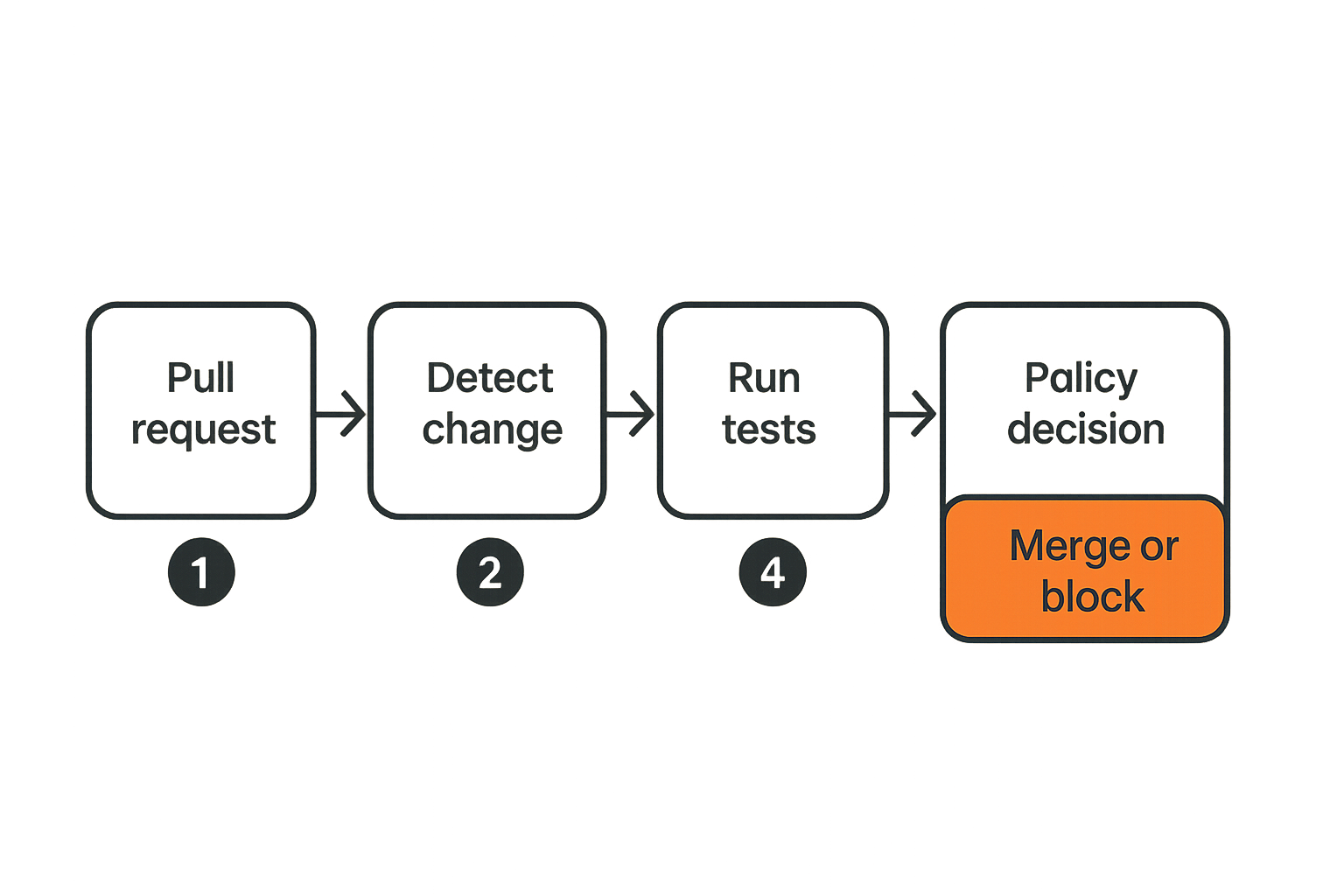
Security teams often start by buying or adding another scanner. The mistake teams make is assuming tool coverage is the same as control. It is not.
A control plane decides what events matter, what evidence is required, who owns the result, and what happens next. Tools feed the control plane. They do not replace it.
Start with events, not tools
Start by listing the events that change risk:
- Pull request opened.
- Workflow file modified.
- Package manifest or lockfile modified.
- New dependency introduced.
- Build permission changed.
- Runner label changed.
- Release workflow modified.
- Secrets, variables, or environment rules changed.
Then decide which tests run on each event. This avoids the common failure mode where every scanner runs everywhere, produces generic output, and developers learn to ignore it.
For example, a change to src/auth/session.ts may need code security analysis and unit tests. A change to .github/workflows/release.yml needs CI/CD security testing. A change to package-lock.json needs package provenance, malware, and install behavior analysis.
The event determines the test. The test produces evidence. The evidence drives a decision.
Decide what blocks and what records
Not every finding should block a merge. But some findings should absolutely block.
Use a simple policy split:
| Finding type | Default action | Reason |
|---|---|---|
| Privileged workflow on untrusted pull request | Block | Direct credential exposure path |
| New package with suspicious install behavior | Block or require approval | Runs before application code review matters |
| Known critical exploitable dependency | Block for production paths | High confidence and reachable risk |
| Low severity lint issue | Record | Useful but not merge-critical |
| Missing metadata or weak package hygiene | Record or review | Context-dependent |
| Broad token permissions in release workflow | Block or require owner approval | Publishing and deployment impact |
This split matters because developers judge security testing by whether the output is operationally sane. If every medium issue blocks, teams route around security. If nothing blocks, the control is decorative.
Practical rule: a security test should have an explicit merge behavior before it is enabled in production.
What to test before code merges
Pre-merge security testing is where supply-chain defense has the most leverage. After merge, the code may already have run in CI, dependencies may already have executed scripts, and release automation may already have seen credentials.
The goal is not to prove the software is perfect. The goal is to reject changes that create obvious, high-impact delivery risk.
Workflow and runner configuration
CI/CD workflow testing should look for changes that affect trust and privilege. In GitHub Actions, that includes:
- Use of
pull_request_targetwith checkout of untrusted code. - Overly broad
GITHUB_TOKENpermissions. - Secrets available to jobs triggered by untrusted contributors.
- Unpinned third-party actions.
- Shell injection through pull request metadata.
- Dangerous use of
workflow_runchaining. - Self-hosted runners exposed to untrusted code.
- Release jobs that can be influenced by pull request inputs.
The practical question is not whether a workflow file is syntactically valid. The question is whether the workflow preserves the trust boundary between untrusted code and privileged credentials.
A workflow diff is security-sensitive. Treat it like infrastructure-as-code for your build system.
Package additions and install behavior
Package changes need a different testing model than CVE scanning. CVEs are historical. Supply-chain attacks are often live before public vulnerability data exists.
For package additions, inspect:
- New direct dependencies.
- Transitive dependency expansion.
- Install scripts such as
preinstall,install, andpostinstall. - Newly introduced binaries.
- Obfuscated code.
- Network calls during install or import.
- Typosquatting and brand impersonation patterns.
- Package age and maintainer changes.
- Sudden version jumps and lockfile churn.
This does not mean every new package is suspicious. It means new executable supply-chain inputs deserve review before they run with CI permissions.
Security testing for GitHub Actions
Security testing for GitHub Actions is not just YAML linting. The workflow file defines execution, identity, permissions, and data movement. A one-line change can turn a safe pipeline into a credential leak.
The failure mode is usually not dramatic. It is a reasonable-looking workflow written by someone trying to get tests working. That is why the testing has to be automatic.
Dangerous permissions and trust boundaries
The first class of checks should focus on permission boundaries. Ask these questions for every workflow:
- What event triggers this job?
- Is the code trusted at that point?
- What token permissions does the job receive?
- Are secrets available?
- Can the job write to the repository, packages, releases, or deployments?
- Does it call third-party code that is not pinned to a commit?
Many teams assume GitHub Actions security is mostly about pinning actions. Pinning helps, but it is only one layer. A pinned action can still be used dangerously if untrusted input flows into a privileged shell command.
For teams that want a drop-in starting point, the vu1nz GitHub Action scans workflow security issues and newly added packages directly in pull requests, which is the decision point that matters.
Pull request events and secret exposure
The pull_request_target event exists for valid reasons, but it is also one of the easiest ways to accidentally cross a trust boundary. It runs in the context of the base repository, not the fork. If the job then checks out and runs code from the pull request, you have a problem.
A dangerous pattern looks like this:
on: pull_request_target
jobs:
  test:
    permissions: write-all
    steps:
      - uses: actions/checkout@v4
        with:
          ref: ${{ github.event.pull_request.head.sha }}
      - run: npm install && npm test
The YAML is understandable. The intent is normal. The result can be unsafe because untrusted code may execute with elevated context.
Security testing should flag the trust boundary, not just the syntax. The evidence should explain why the event, checkout ref, permissions, and install step combine into a risky execution path.
Practical rule: any workflow that mixes untrusted pull request code with elevated tokens or secrets should be treated as a blocking security issue.
Package security testing beyond CVEs
Dependency scanning is necessary, but it is not sufficient. Known vulnerability databases help you manage known vulnerable components. They do not reliably detect fresh malware, typosquats, dependency confusion, or malicious maintainer behavior before disclosure.
That gap is where many teams overestimate their coverage. They see a green dependency bot and assume package risk is handled.
New dependency review
The most important package security event is not every package in the tree. It is the introduction of a new package or a meaningful change to how a package resolves.
New dependency review should answer:
- Why is this package being added?
- Is it direct or transitive?
- Does it execute code during install?
- Does it request network, filesystem, process, or credential access?
- Is the package name close to a popular package?
- Is the maintainer history consistent?
- Did the lockfile add far more packages than expected?
The review should be lightweight enough to happen in a pull request. If it requires a security engineer to manually reverse engineer every package, it will not scale. But if it only checks CVEs, it will miss the class of attacks that matter most during package introduction.
Malware signals and maintainer behavior
A practical package test looks for behavior, not just reputation. Suspicious signals include obfuscation, encoded payloads, child process execution, credential file access, unexpected outbound requests, and install-time execution.
Maintainer context also matters. A brand-new package that looks like a typo of a known library is different from a mature package with a long history. A sudden maintainer transfer followed by a release with install scripts deserves attention. A dependency that only appears in a lockfile diff may still be the thing that runs in CI.
We covered this exact gap in What Dependabot Misses: 6 npm Supply-Chain Attacks That Got Through: known-CVE scanning is useful, but fresh supply-chain attacks often have no CVE when they hit production.
The practical answer is not to remove dependency bots. Keep them. But add tests that evaluate newly introduced package behavior before merge.
What works in practice
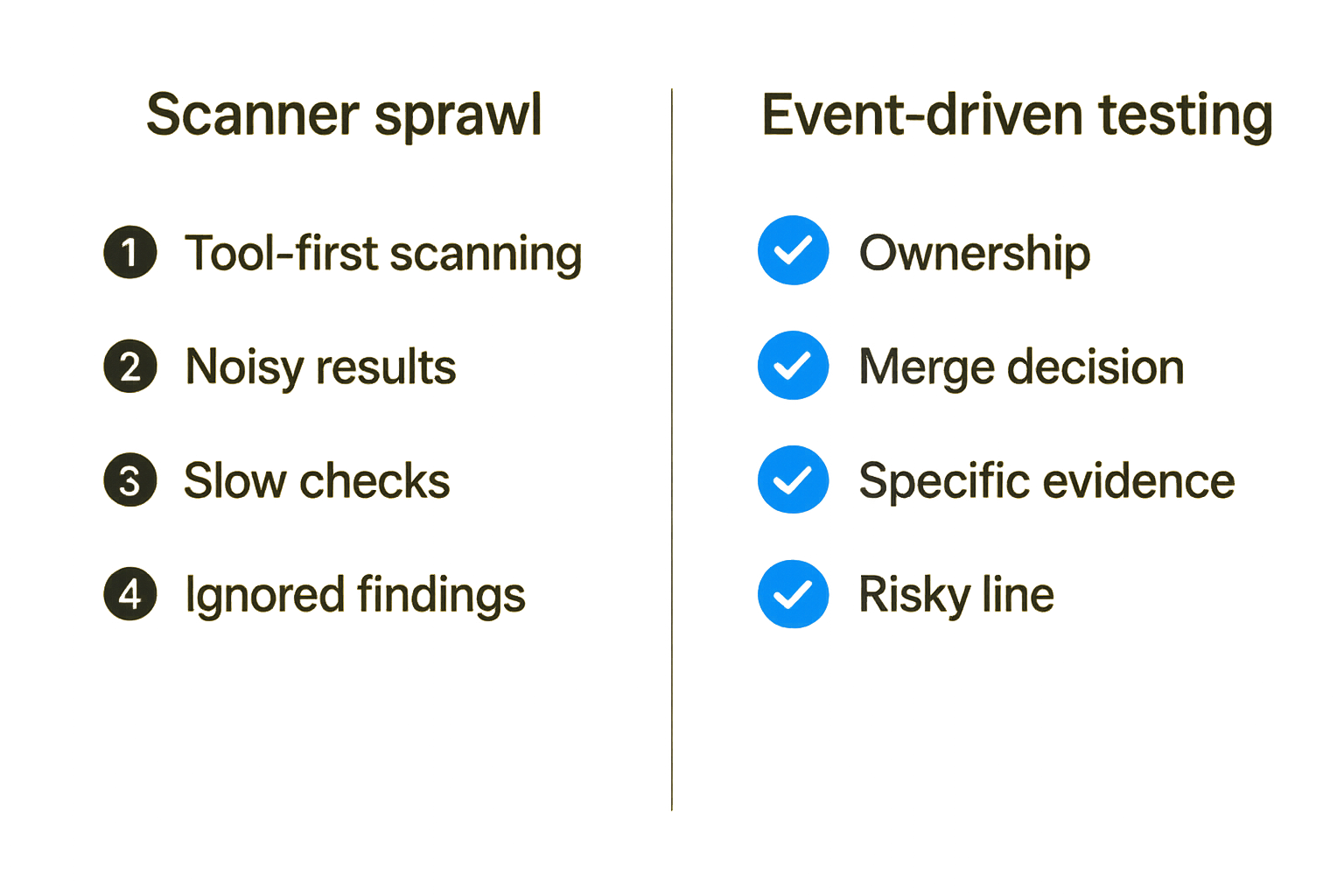
The best security testing programs are boring in the right way. They run automatically, produce specific evidence, block only high-confidence risk, and give developers enough information to fix the issue without a meeting.
This is not about turning every developer into a security researcher. It is about putting accurate guardrails at the point of change.
Fast PR checks
Speed matters. If a security check takes too long, developers will resent it. If it runs after the main test suite, it may be ignored. If it flakes, it loses authority.
Good PR security checks have a few traits:
- They run only when relevant files or manifests change.
- They finish fast enough to be part of normal review.
- They distinguish blocking risk from informational findings.
- They post results where the developer already works.
- They include the risky line, file, package, or workflow step.
- They avoid generic advice that requires a separate research task.
The mistake teams make is trying to shift every security activity left at once. Shift the decision left first. Deep investigation can still happen later, but obvious unsafe merges should stop at the pull request.
Evidence developers can act on
Developers do not need a paragraph saying supply-chain security is important. They need to know which line creates the problem and what safer pattern to use.
A useful finding looks like:
- File:
.github/workflows/ci.yml. - Trigger:
pull_request_target. - Risk: job checks out untrusted pull request code.
- Privilege: token has write permissions.
- Impact: untrusted code can execute with repository write context.
- Fix: use
pull_requestfor untrusted code, remove write permissions, or split labeling from testing.
That changes the conversation. Instead of debating whether security is blocking delivery, the team is deciding whether a specific trust boundary violation should merge.
What fails and why
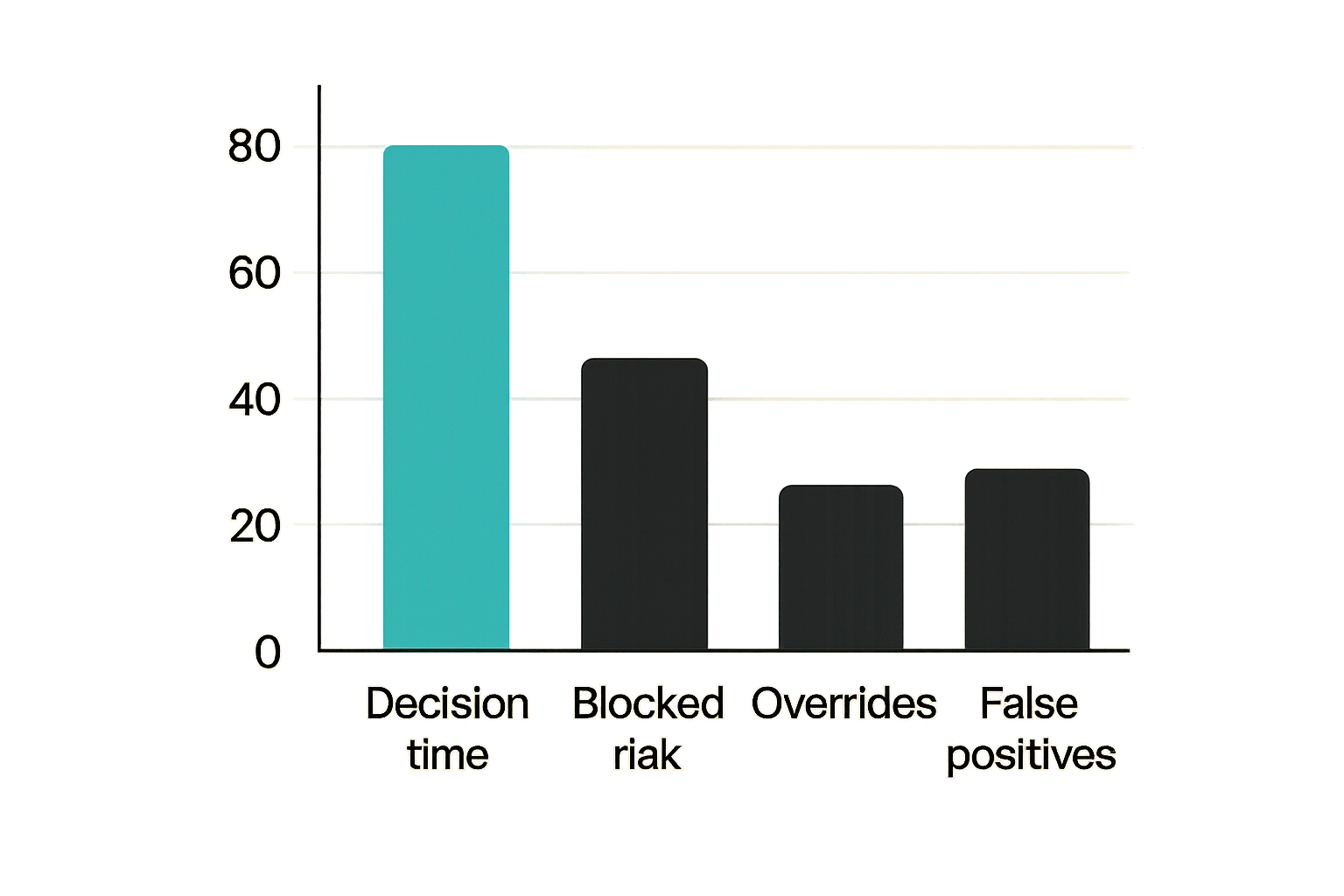
Most failed security testing programs do not fail because the tools detect nothing. They fail because the operating model is unclear.
Findings pile up. Owners are ambiguous. Security asks engineering to fix issues that were never mapped to merge policy. Developers learn that the fastest path is to wait for exceptions.
Scanner sprawl
Scanner sprawl happens when every team adds a tool for a narrow problem, but nobody owns the combined developer experience. You end up with duplicate findings, conflicting severity, inconsistent status checks, and unclear escalation paths.
A comparison is useful:
| Approach | What happens | Operational result |
|---|---|---|
| Tool-first scanning | Add scanners wherever risk exists | Many alerts, weak ownership |
| Event-driven testing | Map tests to delivery events | Fewer results, better decisions |
| Report-driven remediation | Export issues into tickets | Slow feedback, backlog growth |
| PR decision gates | Block or record at merge time | Faster risk reduction |
The point is not to use fewer tools for aesthetic reasons. The point is to avoid making the developer interpret your security architecture from five independent status checks.
Alert-only systems with no owner
Alert-only systems feel safe because they generate visible output. In practice, they often become risk documentation rather than risk reduction.
If a finding has no owner, it is not controlled. If a blocking condition has no exception path, people bypass it. If a scanner flags issues that nobody trusts, its results become background noise.
Every test needs an owner model:
- Who maintains the policy?
- Who reviews exceptions?
- Who fixes workflow findings?
- Who approves risky package additions?
- Who decides whether a release path is production-critical?
- Who can override a block, and where is that recorded?
Practical rule: a security finding without an owner and a next action is not a control. It is a log line.
Implementation workflow for 2026
A good rollout does not start by blocking every repository. It starts by creating a baseline, identifying high-risk paths, and moving from visibility to enforcement where confidence is high.
The practical question is how to add security testing without creating a delivery revolt.
Baseline repositories and policies
Start with the repositories that can cause the most damage:
- Repositories that publish packages.
- Repositories that deploy production services.
- Repositories with release automation.
- Repositories using self-hosted runners.
- Repositories with many external contributors.
- Repositories that manage infrastructure or secrets.
Then baseline the current state:
- Which workflows run on pull requests?
- Which workflows have write permissions?
- Which jobs access secrets?
- Which package managers are used?
- Which manifests and lockfiles change frequently?
- Which branches are protected?
- Which status checks are required?
This baseline gives you policy reality. Without it, you are guessing.
Roll out gates without breaking delivery
Use a staged implementation sequence:
- Inventory workflows, package manifests, and release paths.
- Run security tests in observe mode for a short period.
- Classify findings into block, review, and record categories.
- Fix the obvious high-risk workflow patterns first.
- Enable blocking only for high-confidence conditions.
- Add owner approval for ambiguous package risk.
- Review exceptions weekly until the pattern stabilizes.
- Expand from critical repositories to the broader organization.
The key is to block what you can explain. If the finding cannot be explained clearly to the developer who owns the diff, it is probably not ready to be a hard gate.
What works is phased enforcement. What fails is surprise enforcement across hundreds of repositories with no exception workflow.
Metrics that actually matter
Security testing metrics are often vanity metrics: number of scans, number of findings, number of tickets opened. Those numbers are easy to collect and easy to misunderstand.
The useful metrics measure whether the system improves decisions and reduces risky merges.
Measure time to decision
Time to decision is the time between a risky change appearing and the pipeline deciding what should happen. It is different from time to remediation.
For CI/CD and package supply-chain security, time to decision matters because the dangerous code may execute during the build. If the decision happens after merge, you have already lost the best control point.
Track:
- Time from pull request open to security result.
- Time from relevant file change to updated result.
- Time from finding to developer-visible explanation.
- Time from block to approved fix or exception.
Fast does not mean shallow. It means the first decision happens before the pipeline gives risky code more access.
Track prevented merge risk
Prevented merge risk is not the same as findings count. A hundred low-value warnings do not matter as much as stopping one workflow that exposes secrets to untrusted code.
Useful categories include:
- Privileged workflow blocked.
- Untrusted code execution path blocked.
- Suspicious package addition blocked or approved after review.
- Unpinned release dependency corrected.
- Broad token permission reduced.
- Install-time execution flagged before merge.
You should also track false positives and override reasons. If a rule is frequently overridden, either the rule is too noisy, the policy is misunderstood, or the organization has a workflow pattern that needs a safer supported alternative.
Where vu1nz.com fits
Security testing for CI/CD supply chains needs to be close to the pull request, aware of workflow trust boundaries, and able to inspect package additions before they become part of the build path.
That is the slice vu1nz.com is built around. Not as a replacement for every AppSec tool, and not as a generic dashboard. The useful role is to catch CI/CD and package supply-chain risk at the merge decision point.
Combine CI/CD and package checks
Many teams split workflow scanning and package scanning into separate systems. That misses how attacks actually compose.
A malicious package matters more when it runs in a workflow with secrets. A risky workflow matters more when it installs unreviewed dependencies. A broad token matters more when untrusted pull request code can influence the job.
Combining these checks gives better context:
- The workflow decides what runs.
- The package manager decides what executes during install.
- The token and secrets define blast radius.
- The pull request event defines trust.
That combined view is what makes the finding actionable.
Keep testing close to the pull request
The pull request is where developers still have context. They know why a package was added. They know why a workflow changed. They can fix the diff before it becomes a release incident.
Keeping tests close to the PR also reduces security handoff loss. Instead of asking a separate team to interpret a stale report, the developer sees a specific issue while reviewing the exact change that introduced it.
This is the operator view: security testing should be part of the merge workflow, not an after-action report.
Closing checklist
Security testing in 2026 should answer a hard operational question: can this change safely move through the delivery pipeline?
If your current program cannot answer that before merge, it is incomplete. It may still find useful issues, but it is not controlling the riskiest point in the modern software supply chain.
Minimum viable security testing stack
At minimum, a CI/CD supply-chain security testing stack should include:
- Pull request checks for workflow trust boundary issues.
- Package checks for newly added dependencies and install behavior.
- Known vulnerability scanning for existing dependency risk.
- Branch protection that requires relevant security checks.
- Clear block, review, and record policies.
- Owner mapping for workflow and package exceptions.
- Fast developer-facing evidence.
- Metrics for decision time, overrides, false positives, and prevented risky merges.
Do not start with a perfect model. Start with the highest-risk merge paths and make the decision loop reliable.
The practical next step
Pick three repositories: one package publisher, one production service, and one repo with complex GitHub Actions. Baseline their workflows and dependency changes. Run security testing on pull requests. Block only the findings you can explain clearly and defend operationally.
Then expand. That is how security testing becomes part of delivery instead of another report nobody has time to read.
Try vu1nz.com
You are writing for technical teams that secure GitHub Actions, npm packages, and modern software delivery pipelines. Try vu1nz.com to put CI/CD and package security testing directly into your pull request workflow.
Catch the next supply-chain attack on the PR that adds it.
14-day free trial · no card required