Security public storage sounds like a cloud configuration problem until a release job uploads the wrong artifact, a stale bucket policy remains open, or a package tarball includes .env files that should never have left CI.
Teams think the problem is whether an S3 bucket, GCS bucket, Azure container, CDN origin, or package mirror is public. The real problem is how artifacts become public in the first place, who approves that transition, and what evidence you have when something leaks.
That changes the conversation. Security public storage is not a checkbox called "block public access." It is a release architecture decision. If your CI/CD pipeline can build, sign, upload, overwrite, and publish public objects, then your storage boundary is part of your software supply chain.
The practical question is simple: can you prove that every public object was intentionally published, from an approved workflow, with the right contents, by the right identity, and with monitoring that catches drift?
Table of contents
- Why security public storage is a workflow problem
- What belongs in public storage
- Security public storage threat model
- Reference architecture for safe public storage
- CI/CD controls before anything reaches storage
- Detection and monitoring for public storage
- Access identity and ownership model
- Failure modes that expose data
- Implementation workflow for 2026
- Where vu1nz.com fits
Why security public storage is a workflow problem
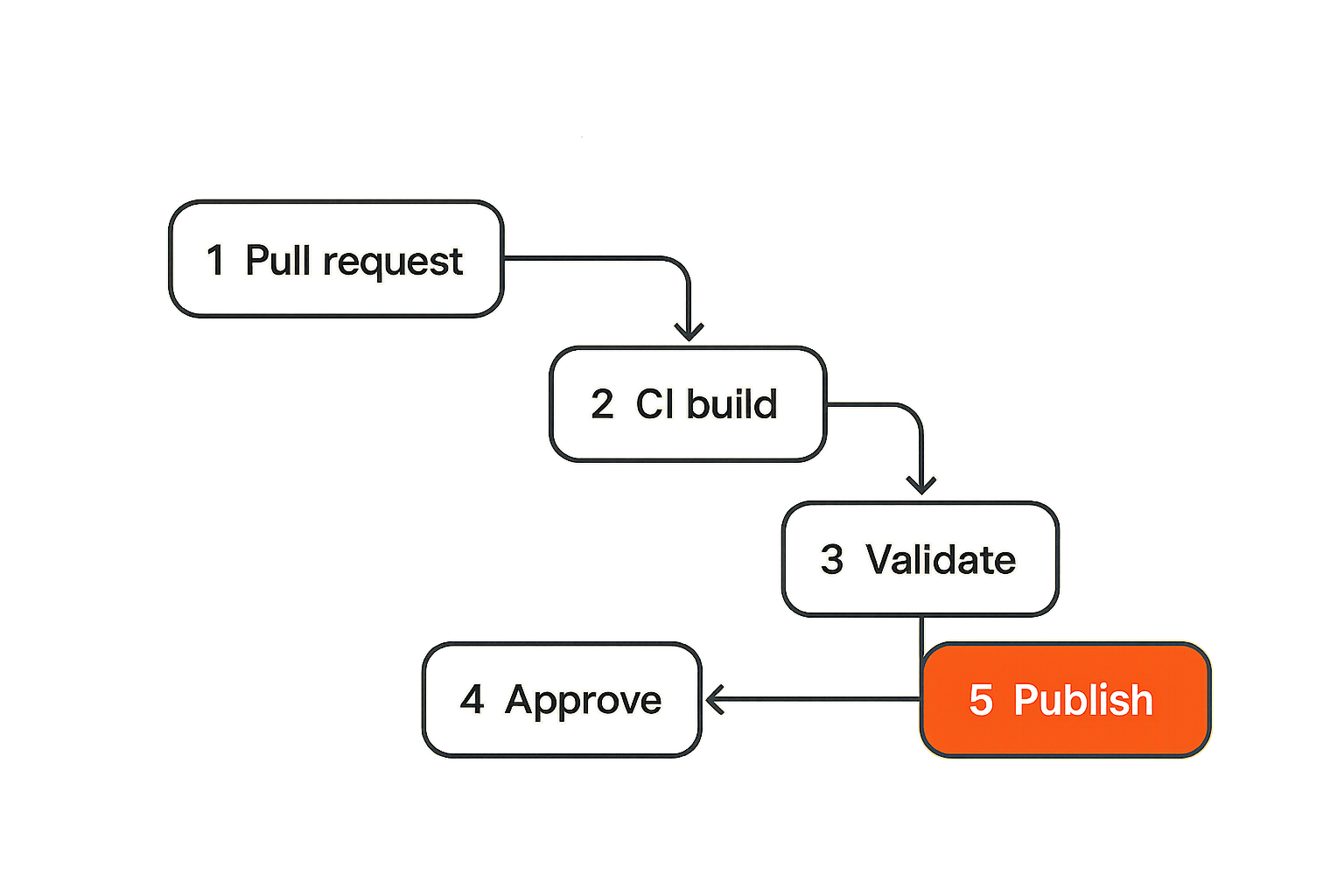
Most public storage incidents do not start with someone saying, "Let's expose sensitive data." They start with a team trying to ship: static assets, release binaries, documentation, model files, package archives, source maps, test fixtures, coverage reports, or customer-import templates.
Public storage is attractive because it is cheap, fast, and easy to automate. That is also why it becomes risky. The same pipeline that publishes a harmless JavaScript bundle can publish a secrets-containing debug bundle if nobody validates the artifact boundary.
Public storage is usually created by automation
In modern engineering orgs, the storage console is not the main actor. Terraform creates buckets. GitHub Actions uploads builds. Package managers cache dependencies. Release scripts sync directories. CDN invalidation runs from CI. A security engineer reviewing the bucket policy sees one slice of the system, not the path that fills it.
The mistake teams make is treating public storage as infrastructure only. Infrastructure matters, but the workflow decides what appears there.
A typical chain looks like this:
- A pull request changes application code or build configuration.
- CI builds artifacts using repository permissions and injected secrets.
- A release job uploads a directory or archive to object storage.
- CDN or package registry paths make the object reachable.
- Monitoring sees HTTP traffic, but not necessarily artifact intent.
If step two or three is weak, the storage control may be technically correct while the published object is still wrong.
The exposure is rarely one bucket
Public delivery paths multiply. A team may have a marketing-assets bucket, a docs bucket, a release-downloads bucket, a package mirror, a CDN origin, a temporary migration bucket, and a staging bucket that someone opened for testing.
What breaks in practice is inventory. The bucket that matters is often the one created six quarters ago by a team that no longer exists. The package artifact that leaks is often generated by a legacy workflow no one wants to touch.
Related reading from our network: remote teams face the same ownership and tool-sprawl problem when collaboration platforms multiply, which is why this cloud stack guide is useful adjacent context: cloud based productivity and collaboration tools.
Treat storage as a release surface
A useful way to think about it is this: public storage is a release surface, not a file dump. If an attacker can influence what gets published, they can influence what users, customers, package consumers, or internal systems fetch.
That means you need controls closer to software release management:
- provenance for artifacts,
- approvals for public transitions,
- immutable object naming,
- least-privilege publishing identities,
- content scanning before upload,
- drift detection after upload,
- response playbooks when exposure happens.
Practical rule: If a storage location is reachable by the public internet, treat every upload path to that location as production deployment infrastructure.
What belongs in public storage
Before you tune policies, decide what should ever be public. This is the conversation many teams skip because it feels slow. It is not slow. It prevents ambiguous exceptions from becoming permanent architecture.
Define allowed public artifacts
Allowed public artifacts should be explicit. Examples might include:
- minified frontend assets,
- public documentation builds,
- release binaries intended for customer download,
- signed checksums,
- public package distribution metadata,
- sample datasets approved for publication,
- logos and marketing media.
Disallowed artifacts should be just as explicit:
- source maps unless intentionally published,
- debug builds,
- CI logs,
- coverage reports,
- dependency caches,
.env,.npmrc,.pypirc, SSH keys, cloud credentials,- customer imports or exports,
- internal architecture diagrams,
- SBOMs that reveal sensitive internal package names unless approved.
The practical question is not whether an object is "sensitive" in the abstract. The question is whether this class of object has a reason to be public and a control owner.
Separate public delivery from internal staging
Do not use one bucket for staging, preview, and public delivery with path prefixes as the only boundary. Prefixes are convenient, but they are a weak mental model. One bad sync command can cross the line.
A better pattern is:
| Storage role | Access model | Writer | Reader | Typical lifetime |
|---|---|---|---|---|
| Build staging | private | CI build job | release job | hours or days |
| Security review quarantine | private | CI scanner | security/release workflow | short-lived |
| Public delivery | public through CDN or signed origin | approved publish job | internet/CDN | versioned, retained |
| Incident hold | private or blocked | response workflow | security team | until investigation closes |
This separation makes accidents less catastrophic. A bad build can land in staging without becoming public. A review failure can stop promotion before the CDN sees it.
Document owner and expiry
Every public storage location needs an owner, a purpose, and an expiry rule. "Platform" is not an owner. "The frontend team owns static production assets for app.example.com" is an owner.
Minimum metadata:
- business owner,
- technical owner,
- public purpose,
- data classification allowed,
- CI workflow that can publish,
- cloud identity allowed to write,
- expected object prefixes,
- logging destination,
- review date.
This can live in tags, Terraform variables, a service catalog, or a repo-local manifest. The format matters less than whether automation can check it.
Security public storage threat model
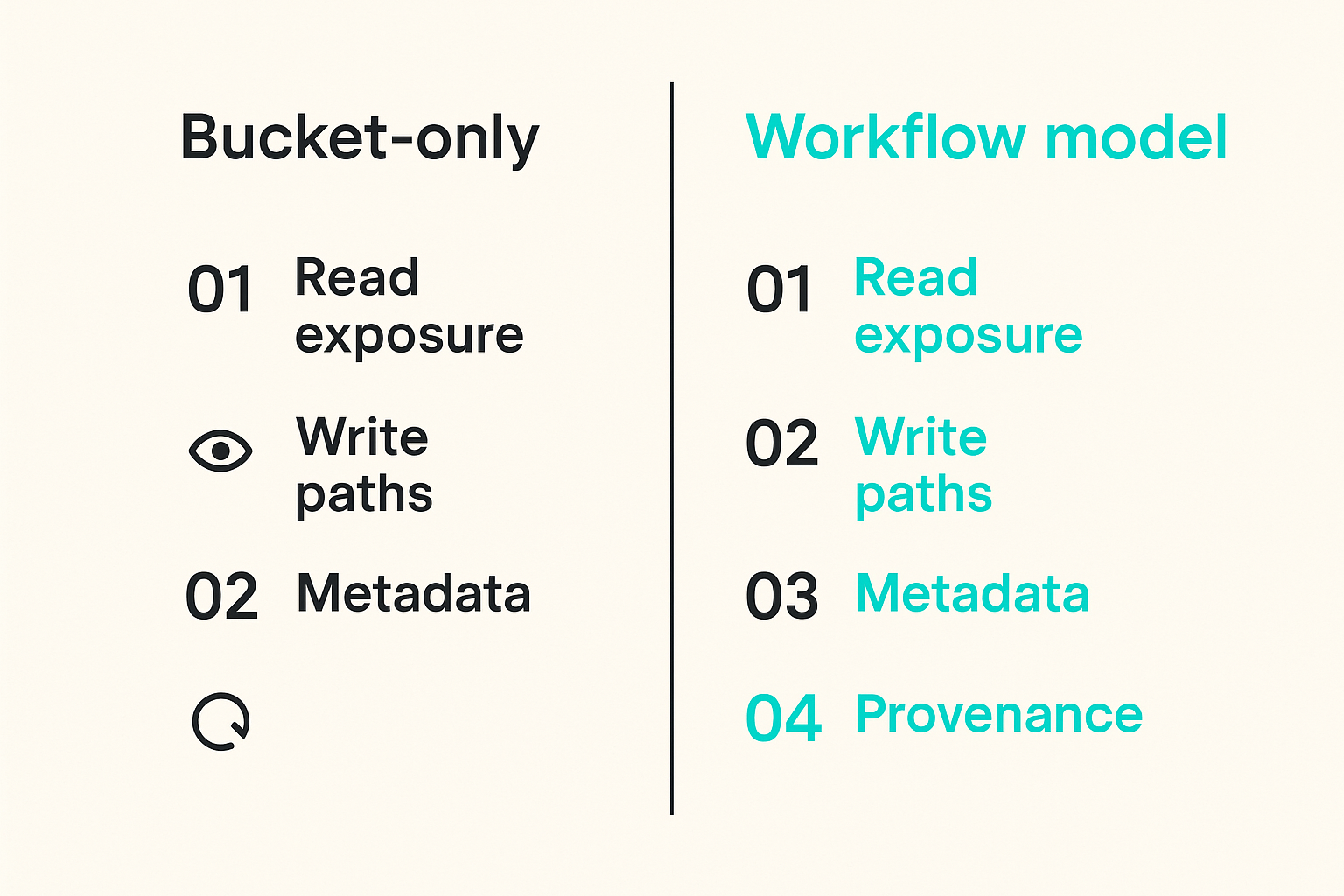
Security public storage has a broader threat model than accidental read exposure. Public read is obvious. Public write, poisoned artifacts, credential leakage, metadata disclosure, and stale objects are usually more interesting.
Read exposure is not the only risk
Read exposure still matters. If internal data lands in a public bucket, the incident clock starts immediately. But security teams should resist the narrow framing that says: "public equals bad, private equals good."
Some storage must be public. The problem is uncontrolled publicness.
You need to ask:
- What data classes may appear here?
- Can object listings be enumerated?
- Are object names guessable?
- Are old versions retained and public?
- Can cached CDN copies survive deletion?
- Do logs capture who uploaded the object?
Related reading from our network: the same distinction between confidentiality promise and operational workflow shows up in encrypted communications; this guide on end-to-end encrypted messaging apps is a useful parallel for teams designing secure-by-default processes.
Write paths are the blast radius
Write access is the higher-value target. If an attacker compromises a CI token, package publish secret, or cloud access key, public storage can become a malware distribution channel.
Examples:
- replacing a release binary with a trojanized build,
- uploading a malicious JavaScript file used by customers,
- modifying update metadata,
- planting phishing content under your domain,
- overwriting checksum files,
- publishing dependency artifacts that downstream automation trusts.
This is why public storage belongs in your supply-chain model. If your release artifact is public and trusted, the path that creates it deserves the same scrutiny as code merge permissions.
Metadata leaks still matter
Object names leak architecture. Directory listings leak product plans. Source maps leak internal function names. SBOMs can leak private package names. Build manifests can leak commit SHAs, branch names, internal hostnames, feature flags, and dependency choices.
None of that always equals critical impact. But attackers chain small disclosures. Public storage metadata often becomes reconnaissance input for package confusion, CI targeting, phishing, or vulnerability research.
Practical rule: Do not classify public storage risk only by file content. Classify object names, manifests, source maps, headers, logs, and retained versions too.
Reference architecture for safe public storage
A safe design does not depend on every engineer remembering the right command. It makes the unsafe path hard and the approved path easy.
Use separate accounts projects or tenants
For high-value public assets, isolate public storage in a separate cloud account, project, subscription, or tenant. That gives you cleaner IAM, clearer logging, and fewer accidental trust paths from internal workloads.
A practical split:
- production application account,
- CI build account,
- artifact staging account,
- public delivery account,
- security logging account.
Not every startup needs five accounts on day one. But the principle scales down: separate storage locations, separate identities, separate permissions, separate logs.
Put controls in front of objects
Direct public buckets are simple, but they are rarely the best default. Put a CDN, edge policy, signed URL service, or application gateway in front when you need control over headers, caching, access patterns, abuse throttling, or emergency blocking.
Controls to consider:
- deny bucket listing,
- allow public reads only through CDN origin access,
- require object versioning,
- prevent overwrite of released versions,
- enforce content-type allowlists,
- apply malware scanning on staging objects,
- maintain checksums and signatures beside artifacts,
- log edge and origin access separately.
The goal is not to hide everything behind complexity. The goal is to make public delivery observable and reversible.
Make immutable publishing the default
Mutable public objects create ambiguity. If latest.zip changes, what did a customer download yesterday? If /app.js is overwritten, which build introduced a malicious payload?
Prefer immutable paths:
/releases/v1.8.3/app-linux-amd64.tar.gz,/assets/commit-sha/app.3f2a9c.js,/docs/build-2026-07-06/index.html,/checksums/v1.8.3/SHA256SUMS.
Then use a small pointer object, manifest, or CDN routing rule for "current" state. Protect that pointer with stricter approval.
Practical rule: Immutable artifacts should be easy to publish. Mutable pointers should be rare, reviewed, logged, and reversible.
CI/CD controls before anything reaches storage
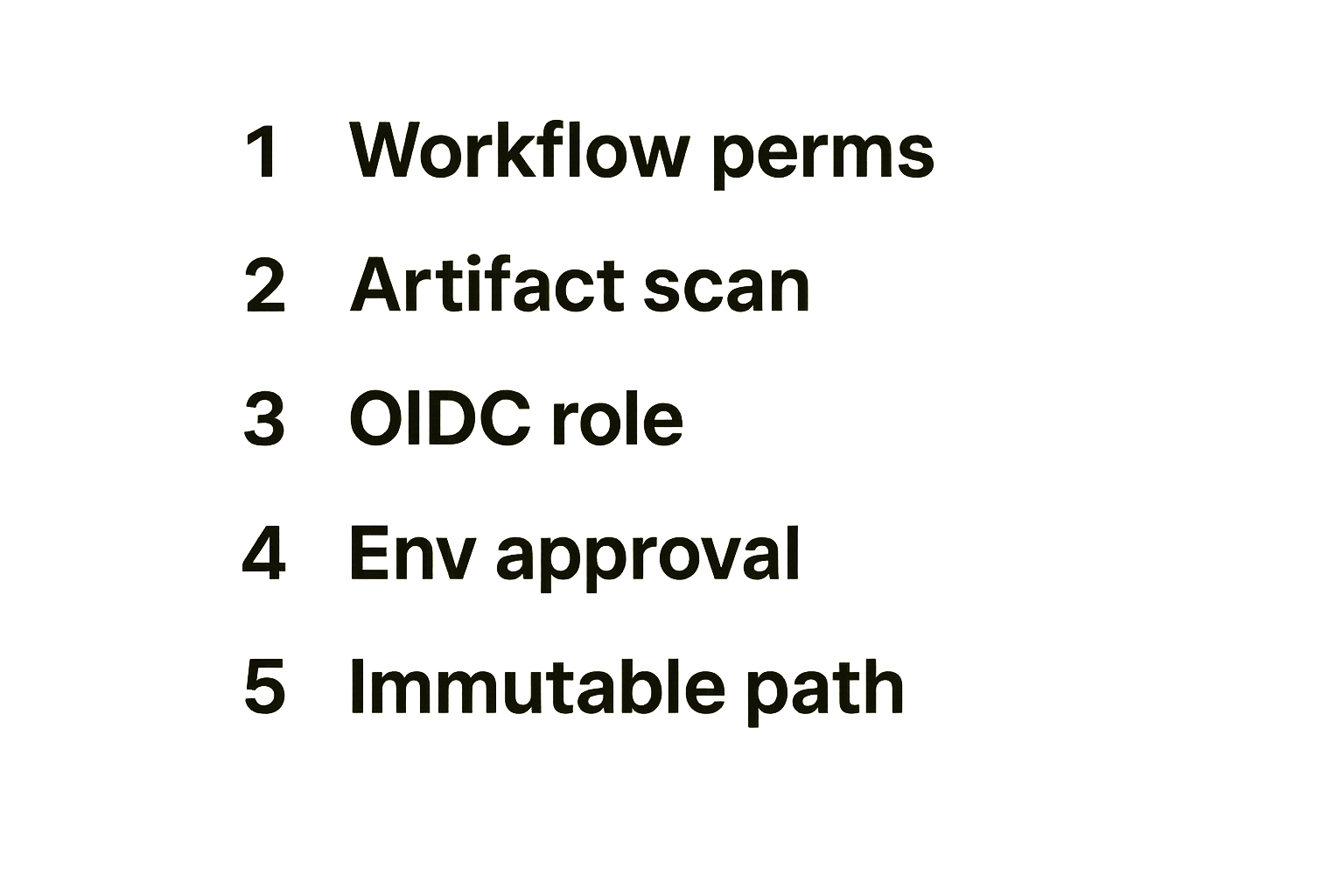
The best public bucket policy cannot save you from a compromised build pipeline that is authorized to publish. CI/CD is the choke point where you can inspect intent, artifact contents, dependency changes, and workflow permissions before public exposure.
Scan workflow permissions
Start with the workflow file. In GitHub Actions, watch for broad permissions, unsafe triggers, unpinned actions, shell injection paths, cache poisoning, pull request target misuse, and secrets exposed to untrusted code.
If a workflow publishes to public storage, it should be boring:
permissions:
  contents: read
  id-token: write

env:
  PUBLIC_BUCKET: public-release-artifacts

jobs:
  publish:
    if: github.ref == 'refs/heads/main'
    environment: production-public-assets
    steps:
      - uses: actions/checkout@v4
      - name: Build
        run: npm ci && npm run build
      - name: Validate artifact boundary
        run: ./security/check-public-artifact.sh dist/
      - name: Upload using workload identity
        run: ./scripts/publish-public-assets.sh dist/ "$PUBLIC_BUCKET"
No long-lived cloud keys. No publishing from pull request code. No unreviewed third-party action running with publish authority.
For a practical scanner that targets this layer, the vu1nz GitHub Action is built to check CI/CD workflow vulnerabilities and newly added packages before they merge.
Validate artifact contents
Content validation should run before upload, not after. At minimum, inspect the directory or archive that will become public.
Checks that work well in practice:
- deny known secret file names,
- scan for high-entropy tokens,
- block private key patterns,
- reject unexpected extensions,
- compare artifact paths against an allowlist,
- detect source maps unless explicitly allowed,
- verify signatures and checksums,
- fail closed when the scanner errors.
Example shell gate:
#!/usr/bin/env bash
set -euo pipefail
TARGET="${1:?artifact directory required}"

find "$TARGET" -type f | while read -r file; do
  case "$file" in
    *.env|*.pem|*.key|*.p12|*.npmrc|*.pypirc)
      echo "Blocked sensitive file: $file" >&2
      exit 1
      ;;
  esac

done

if grep -R --binary-files=without-match -E "(AWS_SECRET_ACCESS_KEY|BEGIN RSA PRIVATE KEY|ghp_[A-Za-z0-9_]+)" "$TARGET"; then
  echo "Blocked suspected secret in public artifact" >&2
  exit 1
fi
This is not a complete scanner. It is a cheap guardrail that catches obvious mistakes. Pair it with stronger secret scanning and package review.
Gate publish jobs by environment
Use deployment environments, required reviewers, branch protections, signed commits where appropriate, and workload identity claims tied to repository, branch, and workflow.
A publish job should answer:
- Which repo can publish?
- Which branch or tag can publish?
- Which workflow file can request the cloud role?
- Which environment approval is required?
- Which storage prefixes can it write?
- Can it overwrite existing objects?
A useful way to think about it: the publish job is not just automation. It is an authorization boundary.
Detection and monitoring for public storage
Controls fail. People create exceptions. Attackers find forgotten paths. Monitoring is where you find out whether your architecture is still true.
Watch configuration drift
Configuration drift is the quiet failure mode. Someone disables block-public-access for a migration. A Terraform state split stops managing a bucket. A manual IAM policy gets added during an outage. A CDN origin setting changes. A lifecycle rule preserves old versions longer than expected.
Monitor for:
- public ACLs or policies outside approved resources,
- new buckets without required tags,
- object listing enabled,
- versioning disabled on public delivery stores,
- logging disabled,
- wildcard principals,
- write permissions granted to broad roles,
- cloud keys created for CI users.
The alert should route to the owner in the storage manifest, not a generic channel where nobody knows the context.
Correlate object events with deploys
Object creation should line up with deployment events. If a file appears in public storage, you should be able to map it to a workflow run, commit, actor, cloud identity, and approval.
Useful correlation fields:
| Signal | Why it matters |
|---|---|
| Object key | Shows exactly what became public |
| Object hash | Detects overwrite or tampering |
| Upload identity | Identifies the publishing principal |
| Workflow run ID | Links storage event to CI evidence |
| Commit SHA | Links artifact to source state |
| Approval record | Confirms release intent |
| CDN request logs | Shows access after publication |
Without this linkage, investigations become archaeology. Security spends hours asking release engineers what happened, while the object remains public.
Related reading from our network: SOC teams deal with the same signal-to-workflow gap, and this operator guide to cyber security analyst jobs frames why alert context matters more than raw alert volume.
Alert on access patterns that do not fit
Public does not mean unmonitored. Alerting on every request is useless, but you can detect patterns that do not fit expected usage.
Examples:
- spikes against old release artifacts,
- requests for common secret paths like
.env,.git/config, or backup archives, - enumeration-like 404 patterns,
- downloads from unusual geographies for customer-only artifacts,
- direct origin access that bypasses CDN,
- user agents associated with mass scanning,
- repeated access to source maps or manifests.
Practical rule: Public-read storage still needs threat detection. The signal is not "someone accessed a public file." The signal is "someone accessed it in a way that does not match the system's purpose."
Access identity and ownership model
Access design determines whether security public storage remains manageable after the first few teams adopt it. If identity is sloppy, every later control becomes harder.
Prefer workload identity over static keys
Static cloud keys in CI are one of the fastest ways to turn a repository compromise into storage compromise. Prefer OIDC or workload identity federation so the cloud role is issued only to a specific repository, branch, environment, and workflow context.
The cloud role should be narrow:
- write only to approved bucket and prefix,
- deny object deletion unless needed,
- deny overwrite for immutable release paths,
- require server-side encryption where relevant,
- require object tags or metadata,
- expire sessions quickly,
- log every assume-role event.
If you still have static keys, put them on a retirement plan. Rotate them, scope them down, and track which workflows use them.
Keep humans out of publish paths
Humans should approve public release, not manually upload artifacts from laptops. Manual upload paths create untracked state: local files, local credentials, inconsistent compression, missing checksums, and no workflow run to investigate.
There will be exceptions. Emergency patches happen. But exceptions need a break-glass path with logging and post-incident cleanup.
What works:
- humans approve deployment environments,
- automation builds and uploads,
- cloud identities are tied to workflow context,
- artifacts are generated in clean runners,
- evidence is retained.
What fails:
- shared cloud console accounts,
- local
aws s3 syncfrom developer machines, - permanent admin keys in CI variables,
- undocumented hotfix buckets,
- manual overwrites of public objects.
Assign operational owners
Security cannot own every public object. Platform cannot know every artifact's business meaning. The service team cannot always see cloud drift. You need shared ownership with explicit boundaries.
A good ownership model:
- service team owns artifact correctness,
- platform team owns storage baseline and reusable modules,
- security team owns policy, scanning, and detection requirements,
- incident response owns escalation workflow,
- finance or procurement may own retention cost review for large public archives.
That changes the conversation from "who opened the bucket?" to "which control failed, and who owns the fix?"
Failure modes that expose data
Most failures are boring. Boring is dangerous because it avoids scrutiny. The following patterns show up repeatedly in production environments.
The wildcard policy that never gets removed
A migration needs temporary public access. Someone adds Principal: "*" or broad write access to unblock a release. The release succeeds. The exception remains.
The fix is not only "do not do that." The fix is exception engineering:
- require expiry on public exceptions,
- open exceptions through code review,
- alert before expiry,
- automatically revert after expiry where safe,
- require a ticket or incident reference,
- include the exception in weekly drift review.
Temporary controls become permanent when no system remembers they were temporary.
The debug archive pushed to production
A build script creates dist/ and also leaves debug/, coverage/, or logs/ under the same workspace. A broad sync command uploads everything.
Bad pattern:
aws s3 sync ./ s3://public-site/ --delete
Better pattern:
npm run build:public
./security/check-public-artifact.sh ./dist-public
aws s3 sync ./dist-public/ s3://public-site/releases/$GITHUB_SHA/ \
  --only-show-errors \
  --cache-control "public,max-age=31536000,immutable"
The difference is intentionality. Publish from a dedicated output directory, not the repo root or a dirty workspace.
This also intersects with dependency risk. A malicious package does not need a CVE to damage your build output, which is why our prior writeup on what Dependabot misses focuses on supply-chain behavior that traditional vulnerability alerts do not catch.
The orphaned bucket no team owns
Orphaned public storage is common after migrations, acquisitions, domain changes, product sunsets, and team reorganizations. It may still serve files. It may still have valid credentials. It may still be indexed. Nobody wants to delete it because nobody knows what depends on it.
Handle orphaning as a lifecycle problem:
- Identify storage with no owner tag or stale owner.
- Check recent object writes and reads.
- Map DNS, CDN, and application references.
- Move to read-only if possible.
- Announce deprecation to internal teams.
- Block writes and monitor errors.
- Archive or delete after an approved window.
Do not start by deleting unknown public storage in production. Start by making it owned and observable.
Implementation workflow for 2026
Security public storage gets manageable when you implement it as a repeatable workflow. The exact cloud provider is secondary. The operating model is what matters.
Inventory what exists
Begin with discovery. Pull from cloud APIs, Terraform state, CDN configs, DNS, package registries, CI variables, and repository workflows.
Create a table like this:
| Field | Example |
|---|---|
| Storage name | public-release-artifacts-prod |
| Provider | AWS S3 |
| Public path | downloads.example.com/releases/ |
| Owner | Release engineering |
| Writer identity | GitHub OIDC role release-publisher |
| Allowed contents | signed release archives, checksums |
| Logging | centralized security account |
| Review date | quarterly |
The first inventory will be messy. That is expected. The value is not the spreadsheet; it is the disputes it surfaces.
Classify and label storage
Use labels that automation can enforce. Avoid twenty data classes if nobody can apply them correctly. Start with a small set:
public-delivery,private-staging,security-quarantine,internal-archive,deprecated-review.
Then map required controls to each label.
For public-delivery:
- owner required,
- public purpose required,
- object logging required,
- write identity allowlisted,
- no static CI keys,
- no object listing,
- versioning enabled,
- immutable release paths preferred,
- artifact scan required before upload.
Enforce policy in pull requests
Policy that only runs after deployment is too late. Enforce storage changes and publish workflow changes in pull requests.
A practical sequence:
- Detect changes to infrastructure modules, workflow files, release scripts, and package manifests.
- Identify whether the change can affect public storage.
- Scan CI/CD workflow risk: triggers, permissions, secrets, actions, shell input.
- Scan newly added packages for suspicious behavior, not only known CVEs.
- Validate storage policy against your baseline.
- Require owner approval for new public paths.
- Block merge when controls fail.
- Record evidence for later incident response.
This is where supply-chain security and cloud security meet. A storage module review without workflow review misses the upload path. A workflow review without storage context misses the public blast radius.
Test response before an incident
Run a tabletop that starts with a simple prompt: "A sensitive archive was uploaded to public storage 14 hours ago. What now?"
You should be able to answer:
- Which object was exposed?
- Who uploaded it?
- Which workflow run produced it?
- Which commit introduced it?
- Was it cached by CDN?
- Was it downloaded?
- Can you revoke, delete, block, or replace it?
- Do you need customer, legal, or regulator notification?
- How do you prevent the same path from publishing again?
If your team cannot answer these in under an hour during a drill, it will not answer them cleanly during a real incident.
Where vu1nz.com fits
Security public storage is not solved by one scanner, one CSPM rule, or one policy document. But CI/CD is the part of the system where small improvements have outsized impact because it is where artifacts, dependencies, secrets, and permissions converge.
Connect storage risk to CI/CD risk
vu1nz.com is focused on CI/CD and package supply-chain security. That matters here because public storage exposure often starts before the cloud provider sees anything unusual.
A risky workflow can:
- publish from untrusted pull request code,
- run third-party actions with broad tokens,
- expose secrets to build scripts,
- install malicious packages during artifact creation,
- upload directories that were never meant for public release,
- use static credentials that survive compromise.
CSPM may later tell you a bucket is public. It may not tell you that a newly added package modified the generated artifact before upload.
What works with vu1nz.com
The useful product fit is pre-merge control. If a pull request changes a GitHub Actions workflow that can publish to public storage, or introduces packages that run in the build path, that change should be reviewed before merge.
vu1nz.com helps by checking CI/CD workflow security issues and scanning newly added packages in pull requests. The point is not to replace cloud IAM, object logging, or storage policy. The point is to catch dangerous release-path changes before they become production infrastructure.
For teams that want research-backed examples of how these issues show up in the wild, the vu1nz team publishes technical writeups and vulnerability notes in its public security advisories.
What still belongs in your cloud platform
Keep cloud-native controls in place. You still need:
- public access baselines,
- IAM conditions,
- workload identity federation,
- storage logging,
- CDN controls,
- encryption and retention policies,
- drift detection,
- incident response automation.
The architecture works when each layer does its job. CI/CD prevents unsafe artifacts and unsafe workflow changes from merging. Cloud controls restrict what publishing identities can do. Monitoring detects drift and abuse. Owners respond with context.
That is the practical model for security public storage in 2026: not fear of public buckets, but disciplined release paths for anything the internet can fetch.
Try vu1nz.com
vu1nz.com is for security engineers and DevSecOps teams who need to defend CI/CD pipelines and software supply chains from modern attacks. Try vu1nz.com.
Catch the next supply-chain attack on the PR that adds it.
14-day free trial · no card required